Preview of GSM/UMTS-smartphone Nokia 6720 Classic
Table of Contents:
- Positioning
- Design, Size, Controls
- Display
- Keypad
- Battery
- Memory
- Performance
- USB, Bluetooth, WiFi
- Music Department
- GPS
- Camera
- Impressions
Sales package:
- Nokia 6720 Classic
- 1050 mAh Li-Pol battery (BP-6MT)
- microUSB data cable (CA-101D)
- Charger (AC-8)
- Wired stereo-headset (HS-125)
- 1Gb microSD memory card
- User Guide
- DVD (Ovi Suite)
Positioning
Nokia's Classic range gets two newcomers in the 230-250 Euro price-bracket for the second quarter of 2009, specifically the Nokia 6700, which is going to become one of the most popular mid-tier solutions, and the Nokia 6720 Classic. While there are worlds of difference between an S40- and S60-based smartphones in terms of feature packs, price-wise they are only 10 Euro away from each other. Although it doesn't take a rocket scientist to figure out that in this particular case the main selling points will include not only functionality, but also aesthetics and design. Both the 6700 and 6720 Classic offer metallic accents in their casings, however the 6700 seems to be a tad more elegant. At the same time it comes without many smartphone-specific feats, making it even harder to choose between the two. On top of that, the way Nokia positions these phones makes things even more tangled - as their marketing department suggests, the smartphone solution is also aimed at people who are heavy on calling features rather than extra abilities of their phones. In fact it's the first time they are trying to bring a smartphone and a feature phone together, so in a way the 6700 and 6720 Classic compete for the end-user's attention between each other.
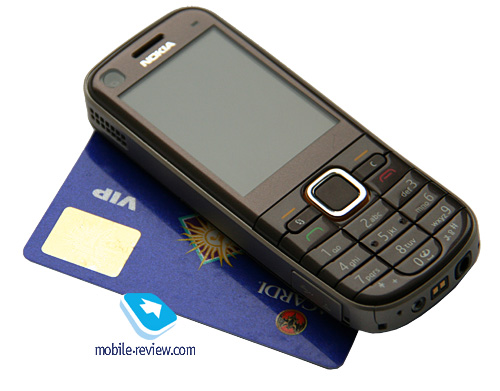
It's obvious that in 2009 most users will prefer the S40-powered offering; however as duos like this one will become more common, S60 products will gain more weight. All in all, it's a win-win move on Nokia's part. Although I'm curious how the sales ratio of 10 to 90 (where 10 is the share of the S60-based phone) will fluctuate over time.
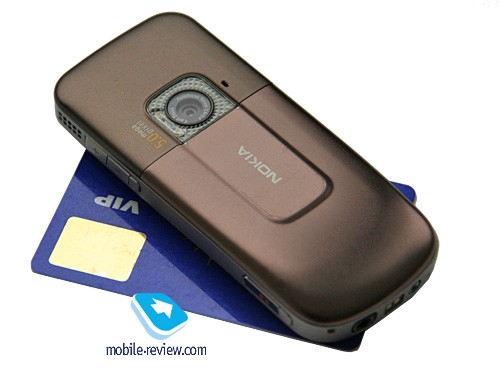
Phones like the 6720 Classic have never been particularly popular - it seems they have always lacked something, or, to be more precise, their sales have always been hampered by Nokia's mass-market solutions. Will the 6720 Classic suffer the same fate? At this point, it can go either way, and there are all prerequisites for the least favorable scenario. On the whole, this phone should be viewed as an able all-in-one solution that features some metallic accents to top things off (this trend will be spreading far beyond the Eseires - expect to see some metal parts in the upcoming Nseries devices as well). On the downside, however, the 6720 Classic doesn't have WiFi connectivity.
Back to the table of contents >>>
Design, Size, Controls
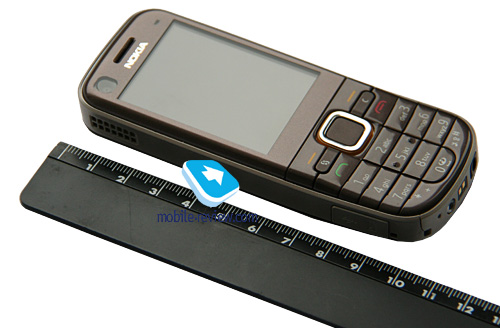
As far as design is concerned, one of the 6720 Classic's characteristic features is the curved bottom part of the casing (that doesn't serve any purpose, though); other than that it's a pretty bog-standard candybar.
Nokia 6720 Classic vs Nokia E55:
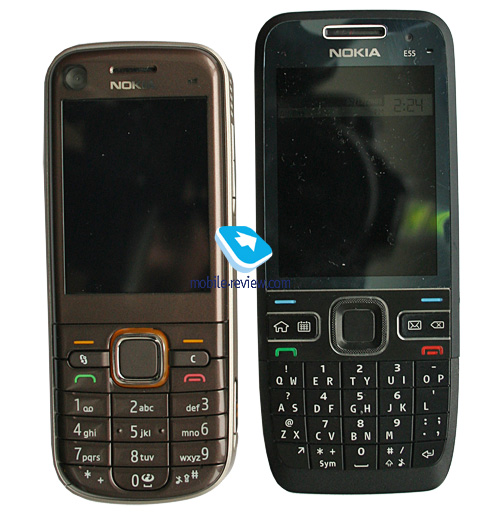
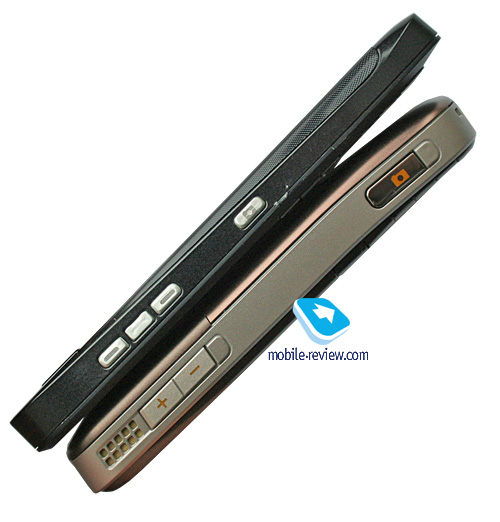
The phone measures up at 110x45x14 mm and weights 110 grams. The battery cover is made of metal and color-keyed to the casing's trim. In fact, the 6720 Classic comes in a choice of three shades of grey, including Chestnut Brown and Iron grey.
Nokia 6720 Classic vs Nokia 6700:
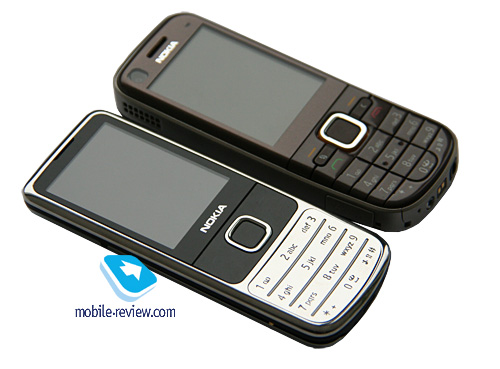
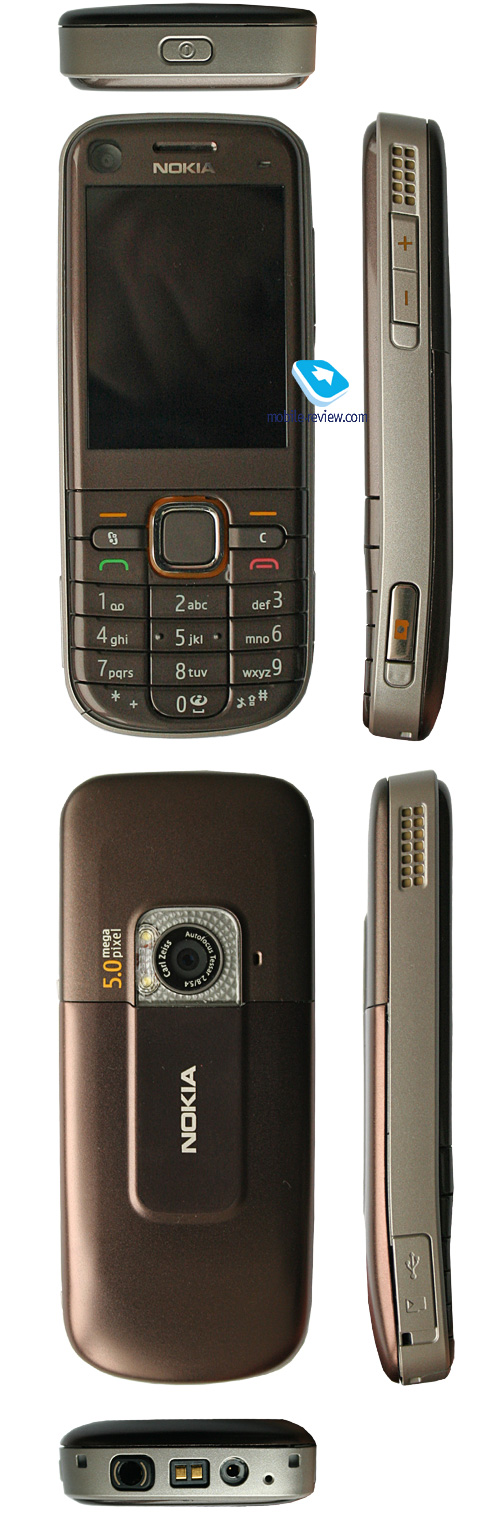
As far as bits and pieces go, I particularly like the charging LED mounted around the charger socket. Also, there is another service LED that can be found in the navigation button.
The 6720 Classic feels great in the hand. Compared to some "slim" phones out there, it appears to be on the chunky side, but as the numbers suggest it's not much different from your "average" handset size-wise.
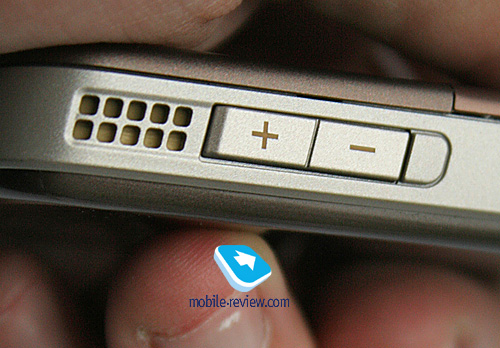
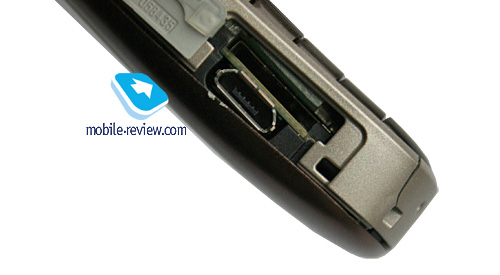
The stereo-speakers are located on either side of the phone, plus there is a volume rocker one the right, along with a dedicated camera key. Perched on the left are the microSD memory expansion slot and microUSB socket.
Topping the display is an ambient light sensor coupled with a forward-facing camera for videoconferencing. At the bottom there are a 3.5 mm audio jack and a 2 mm charger slot.
Back to the table of contents >>>
Display
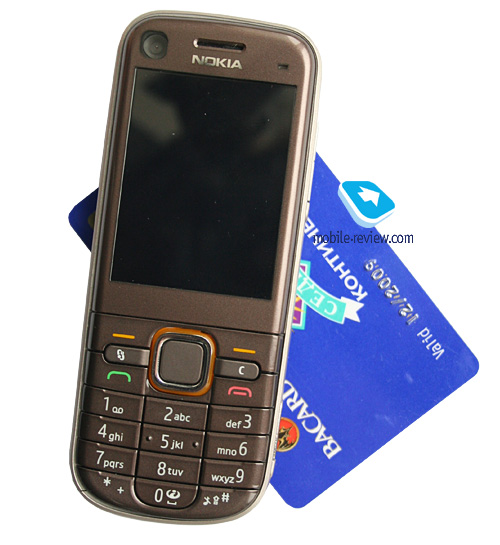
The handset comes equipped with a 2.2-inch QVGA (240x320 pixels) display, capable of showing up to 16M colors, presenting you with quite a bright picture that remains visible in various environments (although it's still inferior to some of Nokia's very own latest-gen phones). All in all, the 6720 Classic packs in a likable screen that can accommodate up to 8 text and up to 3 service lines. In some modes, though, you may get up to 14 text lines. All fonts are sharp and easy to read.
Back to the table of contents >>>
Keypad
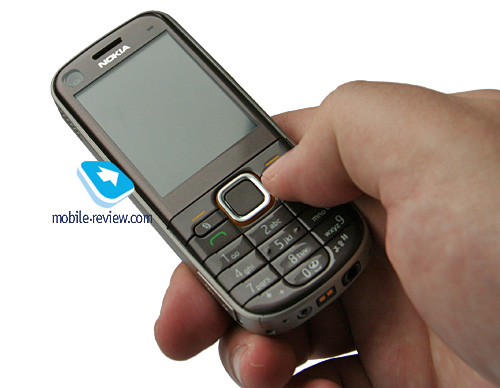
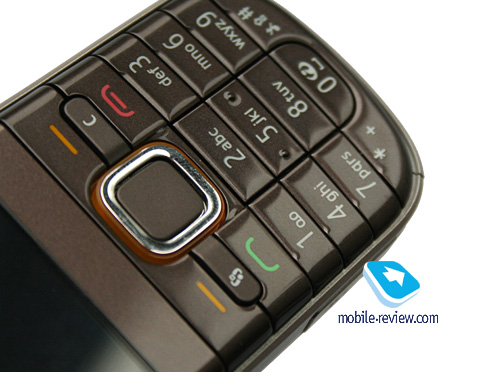
The 6720 Classic's keypad is nothing to shout about - it sports relatively soft and easy-to-press buttons that are evenly lit in bright white. Personally, I really liked the phone's navigation cluster, although the dedicated Menu key is way too tiny.
Back to the table of contents >>>
Battery
The handset utilizes a 1050 mAh Li-Ion battery (BP-6MT), rated for 500 hours of standby, 8 hours of talk time, 27 hours of music, 140 minutes of video recording (top quality settings) and 9 hours of video playback.
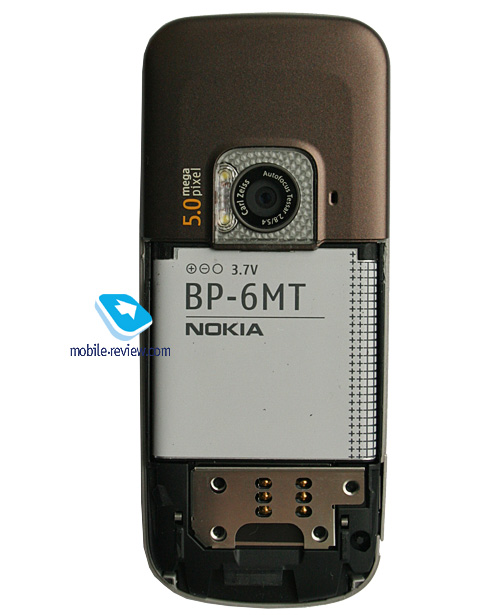
In Moscow the 6720 Classic lasted around 2.5-3 days with moderate use (an hour of calls and up to two hours of music, a dozen of images and several minutes of video) It takes the battery just shy of 2 hours to charge from empty to full.
Below is our chart of battery times we managed to squeeze out of the Nokia 6720 Classic:
- Video playback - 6.5 hours
- WEB-surfing (EDGE) - 3.5 hours
- Music (in earphones) - 19.5 hours
- Radio - 23 hours
Back to the table of contents >>>
Memory
The device comes equipped with 128 Mb of RAM, after first launch you will get around 76 Mb of free memory at your disposal, which is enough for running a dozen applications and browsing "heavy-duty" web-pages - the word "slow-down" is definitely not in the 6720 Classic's vocabulary. Also it offers the user almost 50 Mb of storage, where any data can be stored.
The 6720 Classic deals with microSD memory cards (hot-swappable), the phone comes packaged with an 1 Gb unit (memory cards up to 8 Gb are supported).
Back to the table of contents >>>
Performance
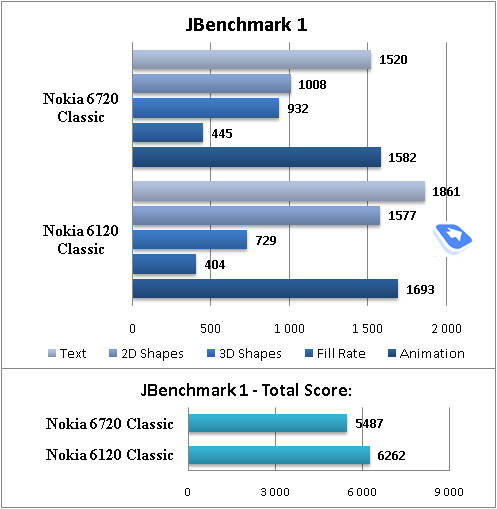
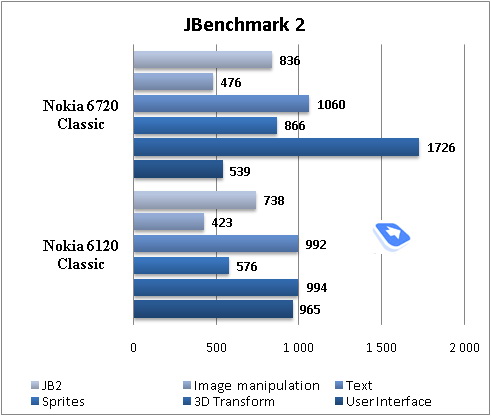
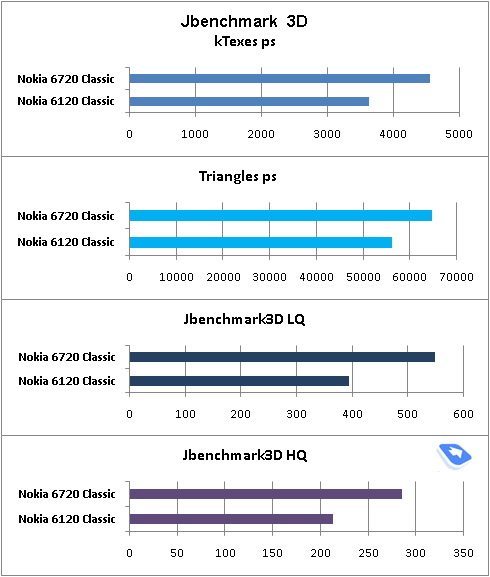
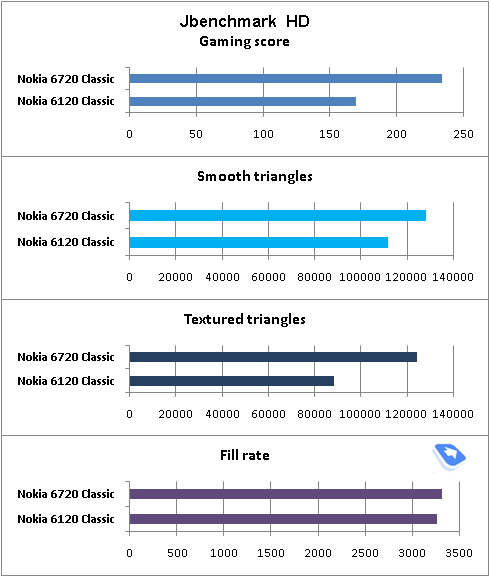
The phone is based on the same platform as the Nokia 5630 XpressMusic, and it scored the same across all performance tests we subjected it to. In our review of the 5630 XpressMusic we pointed out that it wasn't based on a 600 MHz ARM11 CPU, and just to make sure we took our sample apart and checked it out - no 600 MHz processor inside. However, we were contacted by Nokia's employees who showed us that it was build on a 600 MHZ CPU after all. It seems that this new generation of products includes a number of phones and the 6720 Classic is one of them. As soon as we find out more about this CPU collision, we'll update our review of the Nokia 5630 XpressMusic.
Back to the table of contents >>>
USB, Bluetooth, WiFi
USB. You pick one of these 3 connection modes in the USB settings of the 6720 Classic:
- Data Transfer (Mass Storage USB) – memory cards is available, no drivers required, as your OS identifies the handset automatically.
- PC Suite – used for device management via Nokia PC Suite, enables all features of the phone, data backup etc.
- Image Print – no explanation required.
Data transfer speeds top out at around 1 Mb/s.
Bluetooth. The phone comes with Bluetooth v2.0, with support for EDR. The following profiles are supported
- A2DP
- AVCRP
- BIP-ImagePush
- DUN-GW
- FT-Server
- HandsFree-AG (1.0)
- Headset-AG
- OBEX
- OPP-Client
- OPP-Server
- SIM Access-Server
The top speed you can get with the 6720 Classic's Bluetooth connection is around 100 Kb/s. We also tested its A2DP profile in pair with the Sony Ericsson DS970 headset, which worked just fine - we managed our play list, skipped within tracks and adjusted volume seamlessly, however we couldn't make current track's title show up on the headset's display.
Back to the table of contents >>>
Music Department
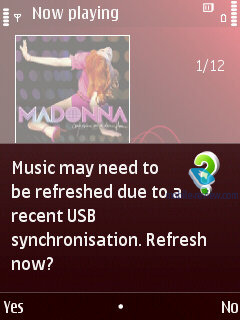
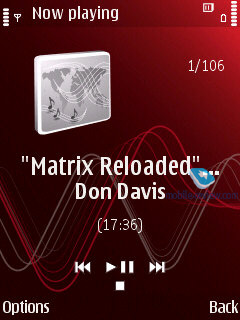
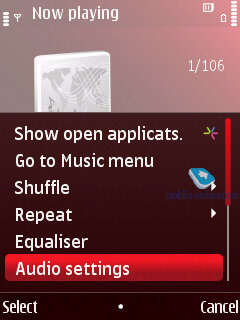
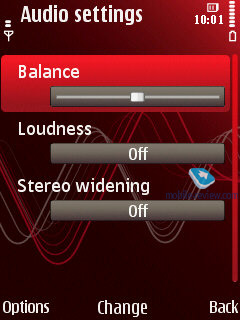
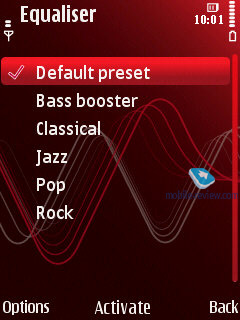
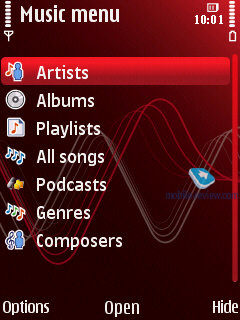
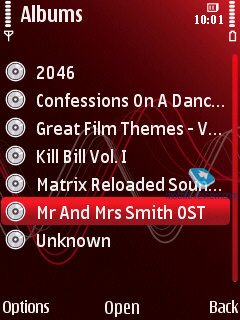
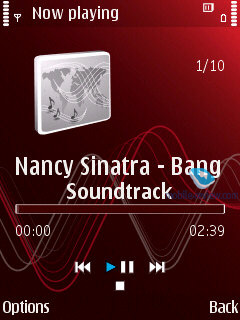
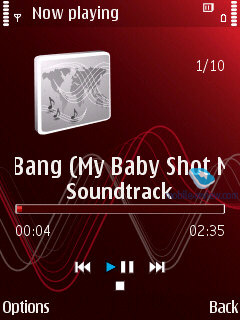
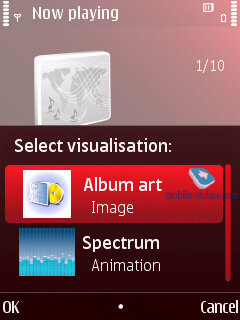
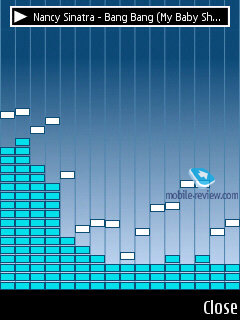
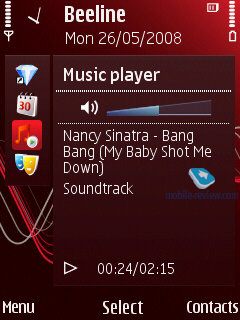
This is another phone that not only comes equipped with a 3.5 mm audio jack, but a dedicated audio chip too, much like the Nokia 5630 XpressMusic. The 6720 Classic's sound quality is more than acceptable, the music player isn't different from any other S60-based device.
Back to the table of contents >>>
GPS
The 6720 Classic's bundled GPS receiver and Maps 2.0 package (can be updated to version 3.0) are nothing out of the ordinary.
Back to the table of contents >>>
Camera
The phone's camera is totally identical to that found in the Nokia N79 - all in all, it does fine as a portable shooter. Also, it's little to no different from the Nokia 6700 on this front.
You can learn more about the N79's camera module here.
Back to the table of contents >>>
Impressions
The 6720 Classic's speakers are almost as loud as those of the Nokia N82. Also, the phone uses dual microphone setup that, in theory, ensures that the user gets better call quality even in noisy environments - we'll put it through its paces in our full review, though.
While the 6720 Classic is pretty affordable at 245 Euro, it's trumped by other smartphones that come armed with WFi connectivity. Its absence makes using some of the phone's features very problematic, to say the least (unless you have a flat data rate contract with your carrier). Other than that, it's a well-balanced and easy to use device that sways more towards the younger portion of the audience, which runs counter to its Classic suffix. Unfortunately, since it doesn't have WiFi functionality and targets a somewhat narrow audience (as they need to separate it from the 6700 in some way).
Related links:
Back to the table of contents >>>
Eldar Murtazin (eldar@mobile-review.com)
Translated by Oleg Kononosov (oleg.kononosov@mobile-review.com)
Published — 19 March 2009
Have something to add?! Write us... eldar@mobile-review.com
|

 Samsung Galaxy Note. First Look